Day 23: Follow Me 'Ome
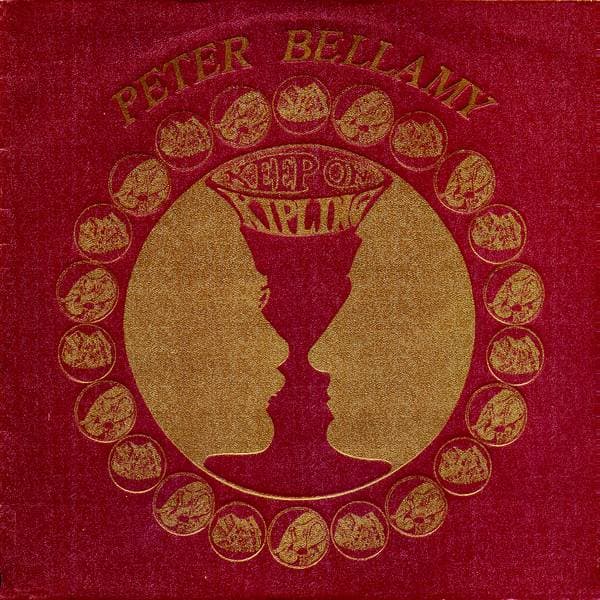
Song Information
Another song that comes from Keep on Kipling, the original poem is Kipling writing from the perspective of a soldier who has lost their comrade in the war. We're starting to reach the end of the calendar, so with that in mind felt like an apt song to be near the end.
This is one of the poems that George Orwell in his somewhat famous denouncement essay of Kipling uses as evidence against Kipling - arguing that Kipling's approach of “cockney'ing” the speaker is there to make fun of them.
Kipling ought to have known better. He ought to have seen that the two closing lines of the first of these stanzas are very beautiful lines, and that ought to have overridden his impulse to make fun of a working-man’s accent. In the ancient ballads the lord and the peasant speak the same language. This is impossible to Kipling, who is looking down a distorting class-perspective, and by a piece of poetic justice one of his best lines is spoiled – for ‘follow me ‘ome’ is much uglier than ‘follow me home’.
George Orwell,Rudyard Kipling
The Kipling Society does have an essay from Christie Davies that attempts to argue that Orwell is wrong since the argument comes from a political perspective but that it is wrong on it's own merits
.
But verse like Kipling's is best judged by the way it sounds, and it sounds better if the 'd's and the 'g's and the aitches are left out. Curiously enough 'ark sounds better than hark when it is the second sound in the line not the first as in 'Oh, 'ark'; by contrast if hark were the first word in the line it would sound better with the aitch pronounced because it would be an emphasised consonant. 'Why of course 'e went and died' slides through more easily than 'why of course he went and died' because the aitch is a difficult, strong, interrupting sound that gets in the way
Throughout this project, grappling with Kipling has been a real fight. Infrequently he'd write something incredible, then you'd dig into the reason he wrote it and you'd find out it was for something that for the modern reader leaves a bad taste in your mouth. For a Peter Bellamy project though, ignoring Kipling would be a disservice - it was a large proportion of his output. From what I can tell, this was from two angles
- He truly believed that Kipling poems were songs and written with that sort of performance in mind, so did 5 albums to prove the point
- He also felt that Kipling was unfairly maligned as a propagandist, and wanted to draw attention to the many poems about the soldier experience which were more humanising.
Even as we come to the end of the the project, I find Kipling challenging - but I can't argue that the songs that Bellamy created by setting them aren't among the finest of his repertoire.
Listen to the Song
Lyrics
There was no one like ’im, ’Orse or Foot,
Nor any o’ the Guns I knew;
An’ because it was so, why, o’ course ’e went an’ died,
Which is just what the best men do.
So it’s knock out your pipes an’ follow me!
An’ it’s finish up your swipes an’ follow me!
Oh, ’ark to the big drum callin’,
Follow me—follow me ’ome!
’Is mare she neighs the ’ole day long,
She paws the ’ole night through,
An’ she won’t take ’er feed ’cause o’ waitin’ for ’is step,
Which is just what a beast would do.
’Is girl she goes with a bombardier
Before ’er month is through;
An’ the banns are up in church, for she’s got the beggar hooked,
Which is just what a girl would do.
We fought ’bout a dog—last week it were—
No more than a round or two;
But I strook ’im cruel ’ard, an’ I wish I ’adn’t now,
Which is just what a man can’t do.
’E was all that I ’ad in the way of a friend,
An’ I’ve ’ad to find one new;
But I’d give my pay an’ stripe for to get the beggar back,
Which it’s just too late to do.
So it’s knock out your pipes an’ follow me!
An’ it’s finish off your swipes an’ follow me!
Oh, ’ark to the fifes a-crawlin’!
Follow me—follow me ’ome!
Take ’im away! ’E’s gone where the best men go.
Take ’im away! An’ the gun-wheels turnin’ slow.
Take ’im away! There’s more from the place ’e come.
Take ’im away, with the limber an’ the drum.
For it’s “Three rounds blank” an’ follow me,
An’ it’s “Thirteen rank” an’ follow me;
Oh, passin’ the love o’ women,
Follow me—follow me ’ome!